
TL;DR
One unexpected lesson from building my second website was that the articles where I leaned more heavily on my own experiences often performed better in Google. It reinforced the idea that while AI and research can help build content, personal insight is often what makes it genuinely useful.
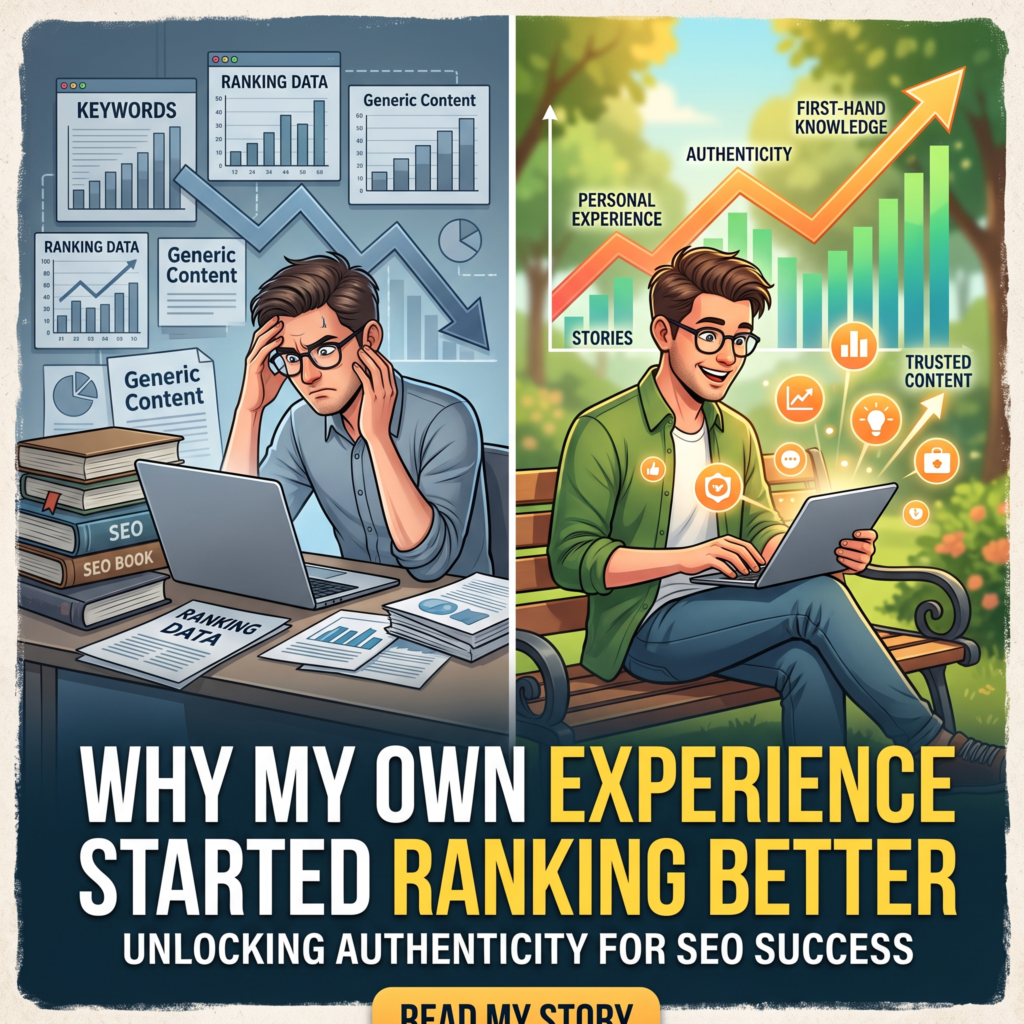
Why My Own Experience Started Ranking Better
When I first started building The Layered Traveller, I spent a lot of time thinking about structure, keywords and strategy.
I wanted to make sure the site was well organised and followed a logical content plan.
Those things are still important.
But over time, I started noticing something that surprised me.
The articles that seemed to gain the most traction were often the ones where I had included more of my own experiences.
Starting With a More Mechanical Process
Like many people experimenting with AI-assisted writing, I initially leaned quite heavily on creating structured first drafts.
The process was efficient.
It helped turn ideas into articles much more quickly than starting with a blank page every time.
But looking back, some of those earlier articles felt a little too polished.
A little too generic.
They explained destinations well enough, but they didn’t always reflect what it actually felt like to stand in those places.
Adding the Parts Only I Could Write
As the site developed, I gradually became more confident about adding my own experiences back into the articles.
That included things like:
- small observations from my trips
- practical lessons I learned while travelling
- moments that surprised me
- reflections that only came from actually being there
These weren’t dramatic stories.
They were simply details that couldn’t be copied from another website.
And I think they helped make the articles feel more genuine.
Experience Creates Context
One thing I started appreciating was that information and experience serve different purposes.
Research helps answer questions.
Experience helps readers imagine themselves there.
For example, two articles might explain how to visit the same destination.
But one also includes:
- what surprised the author
- what they would do differently
- the atmosphere they experienced
- small details that don’t appear in guidebooks
Those elements create context that is difficult to manufacture.
AI Became a Better Partner
Interestingly, adding more of my own perspective didn’t mean using AI less.
It meant using it differently.
Instead of asking AI to produce a finished article, I started treating it more like a collaborator.
It helped me:
- organise ideas
- improve structure
- identify gaps
- challenge assumptions
But the experiences, opinions and observations increasingly came from me.
That felt like a much healthier balance.
Google Seemed to Notice
Around the same time, I also started seeing encouraging signs in Google Search Console.
The site began appearing for a wider range of search queries.
Again, it’s impossible to say that one change alone caused that improvement.
Websites grow because of many small improvements working together.
But this experience reinforced something I now believe quite strongly:
The more of yourself you can thoughtfully add to your content, the harder it becomes for someone else to produce exactly the same article.
A Lesson I’ll Carry Forward
If I could go back to the beginning of the project, I don’t think I’d stop using AI.
It has become an incredibly valuable part of my workflow.
But I would spend less time trying to sound like a polished travel writer…
…and more time sounding like myself.
Because that’s the one thing no tool can genuinely replace.
What Comes Next
As I became more comfortable questioning my own assumptions and refining the content, I realised there was another valuable source of feedback I hadn’t explored yet.
Rather than relying entirely on my own perspective, I decided to ask for a second opinion.
Not because I wanted someone else to tell me what to do.
But because I wanted to understand what I might still be missing.
Next article:
→ Getting a Second Opinion: What a Pinterest Audit Taught Me