
One of the most common reasons people never follow through with starting a website has nothing to do with money, technology, or motivation.
It’s writing.
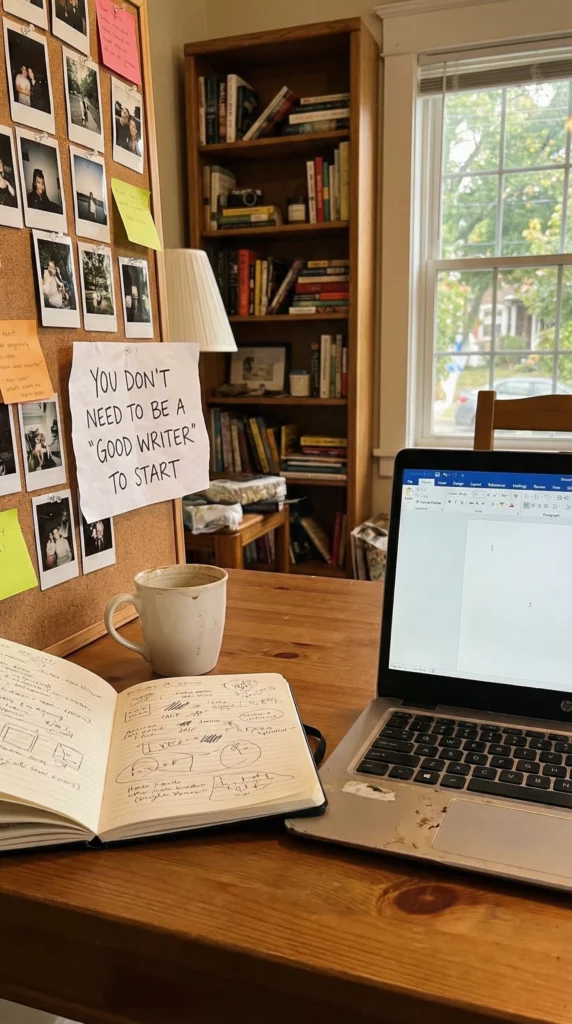
Not because they can’t write — but because they believe they’re not a “good writer.”
I know this feeling well, because it stopped me more than once. So, do you need to be a good writer to start a website?
TL;DR
You don’t need to be a good writer to start building a website. Most people get stuck because writing asks them to think, structure, and polish all at once. What actually helps is reducing the mental load: starting with structure, allowing rough drafts, and using tools that make the blank page less overwhelming. Writing improves through doing, not waiting until you feel ready.
The Real Problem Usually Isn’t Writing
When people say they’re “bad at writing,” what they usually mean is:
- they don’t know where to start
- they don’t trust what they’ve written
- they’re worried it won’t be good enough
- they stare at a blank page and freeze
In my earlier attempts at building websites, my biggest hurdle wasn’t learning how things worked — it was creating enough content. I spent a lot of time staring at blank pages, holding too many thoughts in my head, and quietly wondering how other people seemed to publish so much.
It wasn’t a lack of ideas.
It was mental overload.
Why the Blank Page Feels So Heavy
A blank page feels difficult because it asks you to do too many things at once.
It asks you to:
- decide what you want to say
- organise it logically
- express it clearly
- judge whether it’s “good enough”
All before you’ve even written a sentence.
That’s not a motivation issue or a writing flaw — it’s a thinking overload problem.
Most beginners don’t need better writing skills.
They need fewer decisions happening at the same time.
You Don’t Need to Be “Good” — You Need to Be Clear
One of the most helpful shifts I made was letting go of the idea that my writing needed to sound polished from the start.
Most early content doesn’t need to be impressive.
It just needs to be understandable.
Good writing isn’t about sounding clever. It’s about:
- explaining one idea
- in a way someone else can follow
- without overcomplicating it
Clarity usually comes after writing, not before.
What Actually Helps When Writing Feels Hard
Here are the things that made the biggest difference for me — and that I see help others most often.
1. Starting with structure instead of sentences
It’s far easier to work from a simple outline than from nothing.
Even a loose structure like:
- what this is about
- why it matters
- what someone should know
gives your brain somewhere to land.
2. Allowing rough drafts to exist
The first version isn’t meant to be finished — it’s meant to be external.
Once your thoughts are on the page, they’re no longer all competing for attention in your head. That alone makes the process feel lighter.
3. Separating thinking from editing
Trying to think clearly and edit perfectly at the same time is exhausting.
Writing gets easier when you:
- get the ideas out first
- refine them later
This separation removes a lot of unnecessary pressure.
Where Tools Can Help (Without Replacing You)
This is where tools inside Wealthy Affiliate genuinely helped me — not by “writing for me,” but by helping me think in smaller, manageable steps.
Tools like SiteContent and the AI Article Designer helped by:
- turning vague ideas into a basic structure
- giving me a starting point instead of an empty page
- helping me see how an article could come together
I still decided what to say.
I still edited and shaped the final result.
But I wasn’t trying to hold everything in my head at once anymore.
Writing Improves Through Repetition, Not Confidence
The people who publish consistently aren’t always better writers.
They’re usually just:
- more comfortable starting imperfectly
- less focused on how the first draft sounds
- willing to improve through repetition
Confidence tends to come after you’ve written a lot — not before you begin.
If Writing Has Been the Thing Holding You Back
If content creation has stalled your progress before, it’s worth considering this:
You may not need more discipline.
You may not need more talent.
You may simply need:
- fewer decisions at once
- a clearer starting point
- permission to write imperfectly
That’s what finally made content creation feel manageable for me.
A Gentle Reminder
You don’t need to be a “good writer” to start building something online.
You just need a way to get ideas out of your head and onto the page — one imperfect draft at a time.
Everything else improves as you go.
If you’re interested in where these tools are found. Check out the path I followed.
Frequently Asked Questions
Do I need to be good at writing to start a website?
No. Writing is a skill that develops with practice. Most beginners struggle because they expect their early content to sound polished, when in reality clarity improves through repetition and revision.
What if I don’t know what to write about?
Not knowing what to write usually means you’re trying to decide everything at once. Starting with a simple structure or prompt can help narrow your focus and make the first draft easier to begin.
Can AI tools help if writing feels overwhelming?
AI tools can help by providing structure, prompts, or a starting point. They work best when used as support — not as a replacement for your own thinking or voice.
Will my writing get better over time?
Yes. Writing improves by doing it regularly, not by waiting until you feel confident. Most people look back on their early content and realise improvement came naturally through repetition.
Is this approach suitable for beginners?
Very much so. Beginners benefit the most from reducing mental load and focusing on progress rather than polish. This approach helps you publish consistently without feeling stuck.