
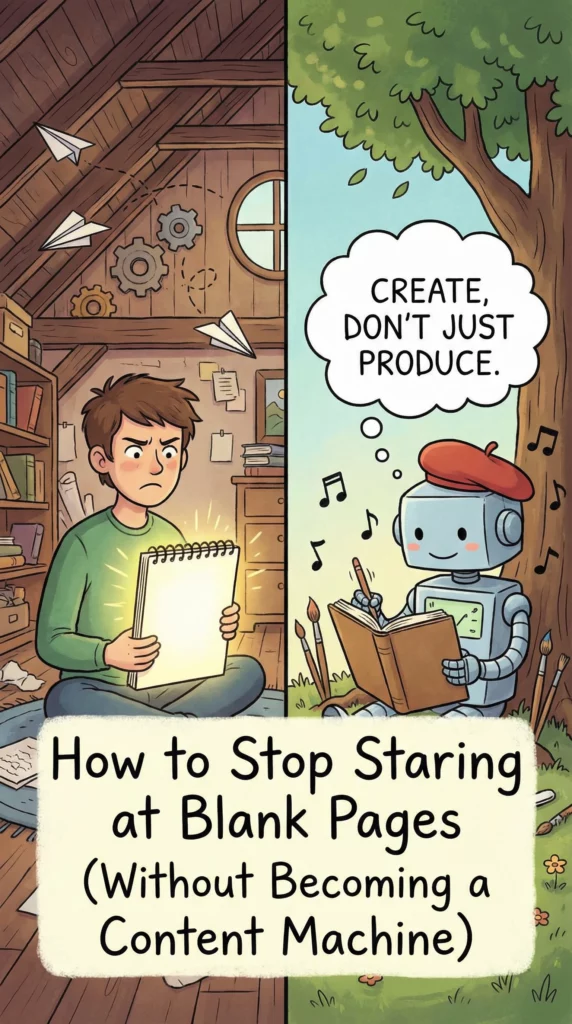
If you’ve ever sat down to work on your website and ended up doing anything except creating content, you’re not alone.
You know content matters.
You know consistency matters.
But the moment you open a new draft, everything stalls.
No words.
No clear starting point.
Just a blinking cursor and the feeling that whatever you write probably won’t be good enough anyway.
For me, this is where most of my earlier website attempts quietly fell apart.
Not because I didn’t care — but because content felt overwhelming before I even began.
TL;DR:
Most people don’t stop creating content because they can’t write — they stop because they don’t know where to start.
Using structured tools like keyword research and content planning removes guesswork, making it easier to publish consistently without burning out.
Most beginners don’t lack ideas — they lack direction
Here’s what I eventually realised:
Most people don’t struggle because they have nothing to say.
They struggle because they don’t know what kind of content they’re supposed to be creating.
When everything feels open-ended, your brain has to decide:
- what topic to write about
- who it’s for
- how detailed it should be
- whether it’s even worth publishing
That’s a lot to resolve before a single sentence exists.
So instead of starting imperfectly and improving over time, many people freeze — or avoid content entirely.
Why blank pages stop progress so effectively
A blank page looks harmless, but it carries pressure.
There’s no confirmation you’re on the right track.
No visible progress until the piece is finished.
No reassurance that what you’re writing actually counts.
If you already doubt your writing ability, that silence can feel like proof you’re not cut out for this.
In reality, it’s not a writing problem — it’s a starting problem.
What finally helped me create content consistently
What changed for me wasn’t confidence or discipline.
It was removing the need to invent content from scratch.
Instead of asking:
“What should I write today?”
I started with clearer prompts:
- What topics already exist in my niche?
- What questions are people actively searching for?
- What type of article am I building — informational, review, comparison?
Once I had that direction, writing felt far less intimidating.
I wasn’t guessing anymore — I was responding.
(Internal link opportunity: You Don’t Need to Be a “Good Writer” to Start)
How guided content tools help without replacing your voice
This is where tools like SiteContent, Jaxxy keyword research, and Business Hubs come into play — not as shortcuts, but as guides.
They help by:
- turning vague ideas into focused article topics
- showing what people are actually searching for
- grouping related ideas so content feels connected
- giving you a structure to work within
When you create a Business Hub, for example, you’re not just picking a niche — you’re automatically shown clusters of potential article ideas related to that topic.
Suddenly, content stops feeling endless and starts feeling organised.
You still write the content.
You still choose what matters.
But you’re no longer starting from nothing.
(Internal link opportunity: Business Hubs overview or WA Hub Path page)
What these tools don’t do (and why that matters)
Just as important — they don’t:
- write your business for you
- remove the need to think critically
- guarantee results without effort
They simply make it easier to show up consistently.
And that matters far more than writing perfectly, especially in the early stages.
Content doesn’t need to feel endless to work
One of the biggest mindset shifts for me was understanding that content isn’t about producing huge volumes — it’s about building momentum.
When writing feels manageable, you’re more likely to:
- publish imperfectly
- return tomorrow
- improve naturally over time
Confidence grows after consistency, not before.
FAQs
Do I need to be good at writing to create website content?
No. Writing improves through practice. Clear direction and structure matter far more than natural talent when you’re starting out.
Is using AI or content tools for blog posts cheating?
No. These tools are supports, not replacements. You’re still responsible for shaping, editing, and deciding what gets published.
How do I come up with blog ideas consistently?
Consistent ideas come from systems, not inspiration. Keyword research tools and topic planning frameworks surface what people are already searching for.
(Internal link opportunity: Jaxxy keyword research tool article)
Can Business Hubs help beginners?
Yes. Business Hubs group related topics within a niche, making it easier to see what content fits together and what to write next.
Will tools stop me from learning how to write?
No. Writing is still a skill you develop over time. Tools simply reduce overwhelm so you can practice consistently.