
TL;DR
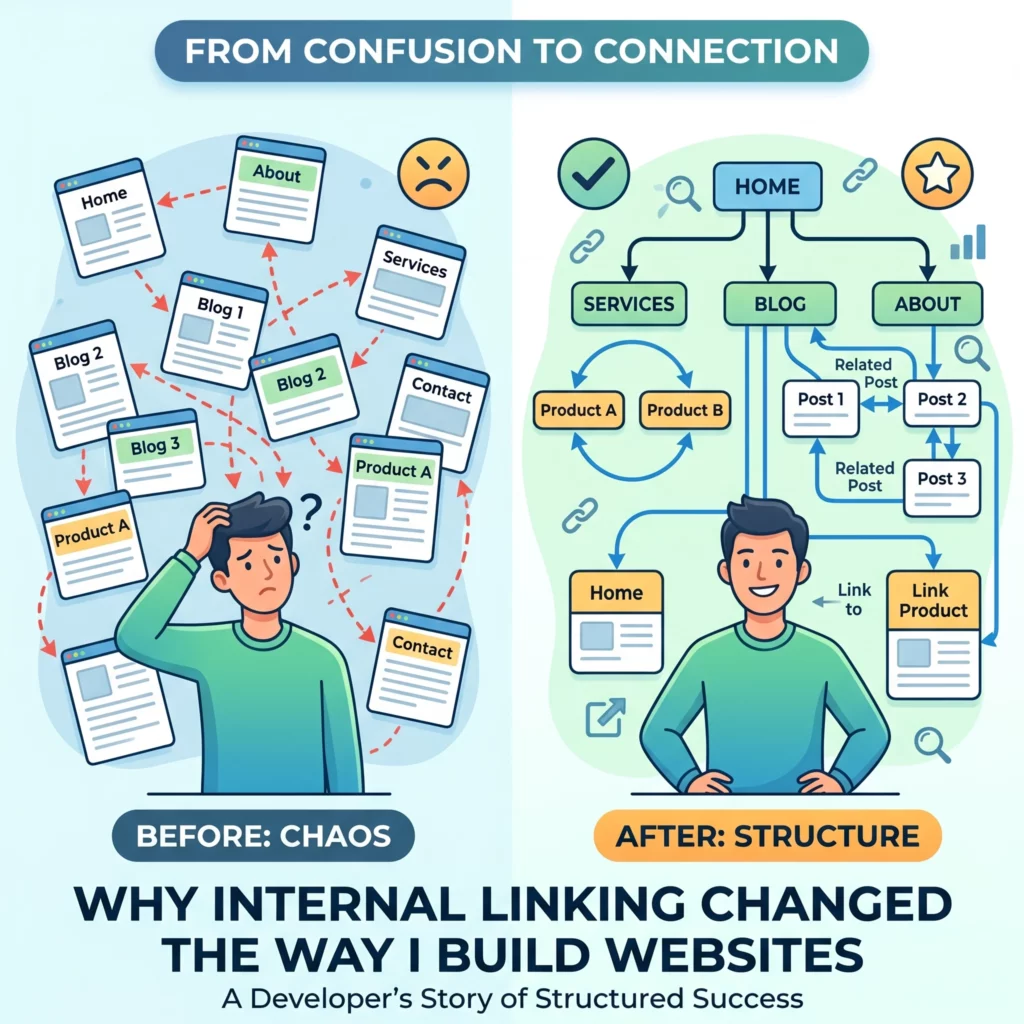
Internal linking helps connect articles together so readers, search engines, and AI systems can better understand how topics relate to each other. More importantly, it makes websites easier to navigate, easier to grow, and less dependent on individual articles succeeding on their own.
What Is Internal Linking?
Internal linking is simply:
linking one article on your website to another related article on your website.
At first glance, it sounds like a small technical detail.
But over time, I realised it changes the way an entire website functions.
Why I Used to Underestimate It
Earlier on, I mostly thought about articles individually.
I would:
- write an article
- publish it
- move on to the next thing
The article itself was the focus.
But eventually I realised something important:
Even strong articles can feel disconnected if there’s no clear pathway between them.
Why Connected Content Feels Better for Readers
When articles naturally connect to related ideas, the experience becomes smoother.
Someone reading about:
- keyword research
- search intent
- choosing a niche
will often benefit from seeing how those ideas connect together.
Internal linking helps readers:
- explore topics more deeply
- continue learning naturally
- move through the website without hitting dead ends
It makes the site feel more like a connected system rather than a collection of separate pages.
Why It Helps Search Engines and AI Systems Too
Modern search systems are increasingly trying to understand:
- topical relationships
- expertise
- content structure
Internal linking helps create those signals naturally.
It shows:
- what topics relate to each other
- which articles are foundational
- how the broader ecosystem fits together
Not because of “SEO tricks”…
…but because the structure genuinely makes sense.
This Changed the Way I Plan Content
Once I started thinking about internal linking properly, content planning became much easier.
Instead of asking:
“What random article should I write next?”
I started asking:
- what supports this topic?
- what naturally connects to this article?
- where are the gaps in the ecosystem?
That shift completely changed how I think about building websites.
Why Internal Linking Reduces Pressure
One thing I really like about connected content is that it reduces the pressure on individual articles.
Instead of every page needing to:
- rank immediately
- convert immediately
- succeed on its own
the website starts working together as a system.
An article can:
- support another page
- help readers move deeper
- become part of a larger structure
That feels much more sustainable long-term.
What I Started Doing Differently
Over time, I began:
- adding more natural links between articles
- building reusable link blocks
- thinking more intentionally about content relationships
Not in an overly technical way.
Just in a:
“how does this connect?”
kind of way.
That simple shift made the site feel much more organised and easier to expand.
Why This Matters for Discoverability
Discoverability isn’t only about getting people onto your site.
It’s also about helping them:
- find related ideas
- continue exploring
- understand the bigger picture
Without those pathways, good content can become difficult to:
- discover
- navigate
- fully understand
This was something I started noticing much more clearly while evolving my travel site case study and redesigning parts of the content strategy.
Why Internal Linking Helps Me Know What to Write Next
This was probably the most unexpected benefit.
Once content becomes connected, future ideas often appear naturally.
One article creates:
- support article ideas
- comparison ideas
- beginner-question ideas
- deeper follow-up topics
The website itself starts guiding the next stage of growth.
That’s a very different feeling from constantly searching for random content ideas.
A Better Way to Think About Internal Linking
I’ve started thinking about websites less like collections of articles…
…and more like connected pathways.
Internal links create:
- hallways
- doors
- bridges between ideas
Without them, even good content can feel isolated.
With them, the entire site becomes easier to understand and grow.
FAQ
What is internal linking?
Internal linking is linking one page on your website to another related page on your website.
Why is internal linking important?
It helps readers navigate your site more easily while also helping search engines and AI systems understand how topics connect together.
Does internal linking help SEO?
Yes. Internal linking helps search engines understand topical relationships and content structure, which can improve discoverability over time.
How many internal links should an article have?
There’s no perfect number. The goal is to add natural, helpful links where topics genuinely connect.