
TL;DR
Websites often grow more effectively when content works together instead of existing as isolated articles. Pillar content introduces broad topics, while support content explores specific questions and related ideas. This structure helps readers, search engines, and even AI systems understand how everything connects.
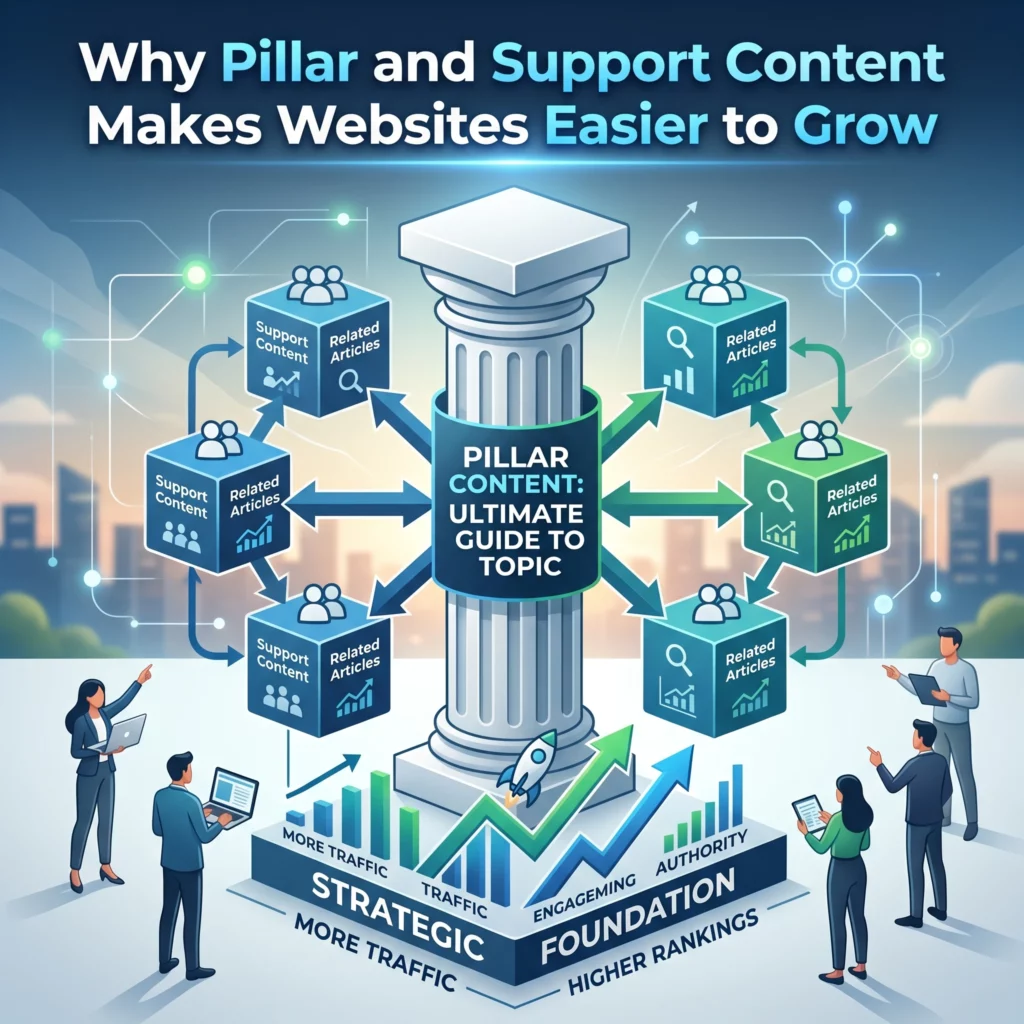
What Is Pillar and Support Content?
At its simplest, pillar and support content is just:
connected content with a clear structure.
A pillar article usually covers a broader topic.
Support articles then explore:
- related questions
- subtopics
- comparisons
- practical examples
Instead of isolated articles competing for attention, the content begins working together as a system.
Why Random Content Becomes Difficult to Sustain
One of the biggest challenges when building a website is maintaining momentum.
If every article is:
- completely unrelated
- targeting a different audience
- solving a different problem
Eventually the site starts feeling scattered.
This makes it harder to:
- build authority
- create internal links
- know what to write next
It also makes growth feel less consistent.
That’s something I gradually realised while building both The Gentle Earner and my travel site case study.
How Pillar Content Creates Direction
Pillar content acts like a central hub.
For example, a broad article about:
- starting an online business
- affiliate marketing
- making money online in retirement
can naturally connect to:
- beginner questions
- comparison articles
- mindset pieces
- practical tutorials
The pillar creates direction.
Instead of asking:
“What should I write next?”
You start asking:
“What naturally supports this topic?”
That’s a much easier and more sustainable process.
Why Support Content Matters Just As Much
Support articles are where depth and discoverability often happen.
These articles usually answer:
- specific questions
- beginner concerns
- comparison searches
- practical problems
For example:
- How long does it take to make money online?
- What progress actually looks like online
- Wealthy Affiliate vs going it alone
These narrower articles often become:
- entry points into the site
- internal linking opportunities
- bridges toward deeper content
Why This Structure Helps Discoverability
Search engines and AI systems are increasingly trying to understand:
- expertise
- topic relationships
- content depth
When articles are clearly connected, it becomes easier to understand:
- what the site is about
- how topics relate to each other
- where authority exists
This helps create stronger topical signals over time.
Not because of “tricks” — but because the structure genuinely makes sense.
This Changed the Way I Think About Websites
Earlier on, I mostly thought in terms of:
individual articles
Now I think more in terms of:
ecosystems
The article matters.
But so does:
- what it connects to
- what supports it
- what doorway it creates into the wider site
That shift completely changed how I approach:
- content planning
- internal linking
- Pinterest strategy
- even video ideas
Why Pillars Don’t Need to Be Massive
A common misconception is that pillar content needs to be:
- enormous
- ultra-detailed
- “ultimate guide” style
But clarity matters more than size.
A useful pillar simply needs to:
- introduce the topic clearly
- connect naturally to related content
- help readers move deeper into the site
That’s enough.
What This Looks Like in Practice
I’ve started seeing websites less like collections of pages…
…and more like houses.
Pillar content creates the structure.
Support content creates:
- rooms
- hallways
- doors
- pathways between ideas
Without those connections, even good content can become difficult to enter or navigate.
Why This Matters Long-Term
This kind of structure makes websites:
- easier to grow
- easier to maintain
- easier to expand over time
Instead of constantly starting from scratch, each new piece strengthens the system around it.
That’s what makes gradual growth feel more sustainable.
FAQ
What is pillar content?
Pillar content is a broad article that introduces and connects a larger topic. It acts as a central hub for related support articles.
What is support content?
Support content explores smaller questions, comparisons, and related subtopics connected to a broader pillar topic.
Why does this structure help websites grow?
Connected content helps readers and search systems understand how topics relate to each other, which improves discoverability and long-term organisation.
Does every website need pillar content?
Not formally, but most successful websites naturally develop connected topic structures over time.