
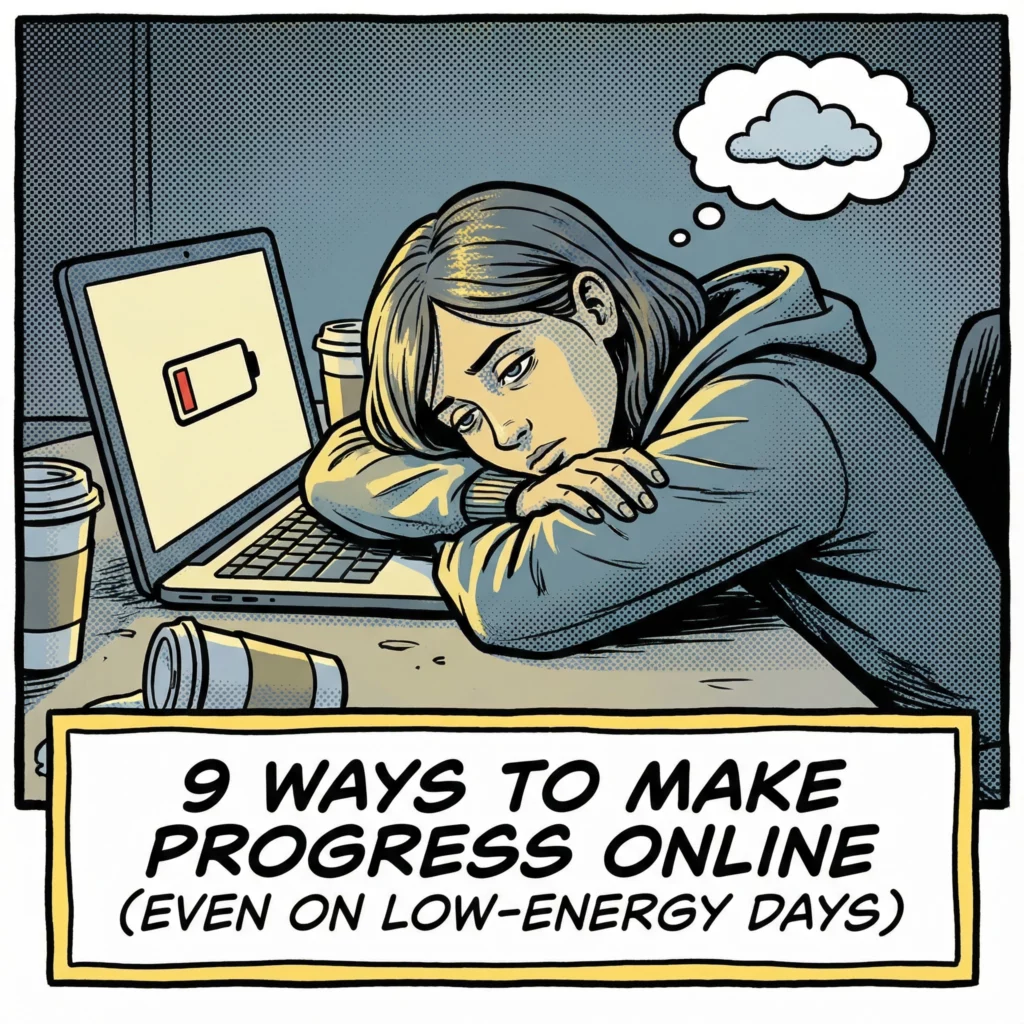
Some days, working online feels exciting and full of possibility. Other days, even opening your laptop feels like too much.
If you’re rebuilding after burnout, long-term unemployment, or mental health challenges, low-energy days aren’t a failure — they’re part of the process. The good news is that making progress online doesn’t always require motivation, long hours, or intense focus.
Here are nine realistic, low-pressure ways to move forward online, even when your energy is limited.
TL;DR
Low-energy days don’t mean you’re failing at making money online. They’re normal, especially if you’re starting over or protecting your mental health. Small, gentle actions — even five or ten minutes at a time — add up over weeks and months. Sustainable progress beats burnout every time.
1. Tidy One Small Thing
On low-energy days, don’t aim to build — aim to maintain.
This could be:
- Fixing a typo in an older post
- Updating a broken link
- Tweaking a headline
- Cleaning up categories or tags
These small improvements still count. Over time, they quietly compound into real progress.
2. Re-Read Something You’ve Already Written
You don’t need to create new content every day to move forward.
Re-reading an existing article can:
- Spark fresh ideas
- Highlight easy updates
- Remind you how far you’ve already come
If you’re feeling stuck, this can be more encouraging than starting from a blank page.
(This pairs well with reviewing posts like Steps For Starting An Online Business or your beginner guides.)
3. Save One Helpful Resource for Later
Progress isn’t always visible.
On low-energy days, simply:
- Bookmark an article
- Save a YouTube tutorial
- Note a future blog topic
You’re still laying groundwork for your online income journey — just at a gentler pace.
4. Write One Paragraph (Not a Full Post)
Forget the pressure of finishing something.
One paragraph is enough.
That might be:
- A rough introduction
- A personal reflection
- A single idea to expand later
Many successful blog posts — including beginner guides like What Is Affiliate Marketing? A Beginner’s Guide — start as imperfect notes written on tired days.
5. Update One Internal Link
Internal linking is one of the lowest-energy SEO wins you can make.
Try:
- Adding a link to a related post
- Improving anchor text so it’s clearer and more helpful
For example, linking naturally to:
Small tweaks like this improve both SEO and reader experience.
6. Check Your Stats (Without Judging Yourself)
This isn’t about obsessing over numbers.
Just look for:
- One post that got a visit
- One page with a longer time on site
- One small sign that someone found your work
Even quiet progress is still progress — especially in the early stages.
7. Do One Admin Task You’ve Been Avoiding
Low-energy days are perfect for simple, non-creative tasks like:
- Renaming image files
- Adding alt text to one image
- Updating a plugin
- Organising drafts
These tasks don’t require inspiration — just a little presence.
8. Learn for 10 Minutes (Then Stop)
Set a short timer and stop when it ends.
Watch or read:
- One short tutorial
- One walkthrough
- One explanation of a confusing topic
You don’t need to implement anything immediately. Learning still moves you forward, especially if you’re new to online income models like affiliate marketing.
9. Show Up Briefly — Then Rest
Sometimes the win is simply showing up at all.
Opening your website
Checking your task list
Logging in for five minutes
That counts — particularly if you’re rebuilding confidence after a rough period. Long-term online success is built through consistency, not pressure.
Frequently Asked Questions
Can you really make progress online without working hard every day?
Yes. Real progress comes from consistency over time, not constant intensity. Gentle effort still compounds.
What if I have several low-energy days in a row?
That’s okay. Focus on maintenance tasks or learning, and return when your energy allows. Online business is a long-term project.
Is this approach too slow to make money online?
It may feel slower at first, but it’s far more sustainable. Many people quit because they push too hard, too fast.